




What to Do About Gutter Blockage Removal (Quick Answer)
Gutter blockage removal is something every homeowner eventually has to deal with — and the sooner you act, the less damage you’ll face.
Here’s the short version if you just need the basics:
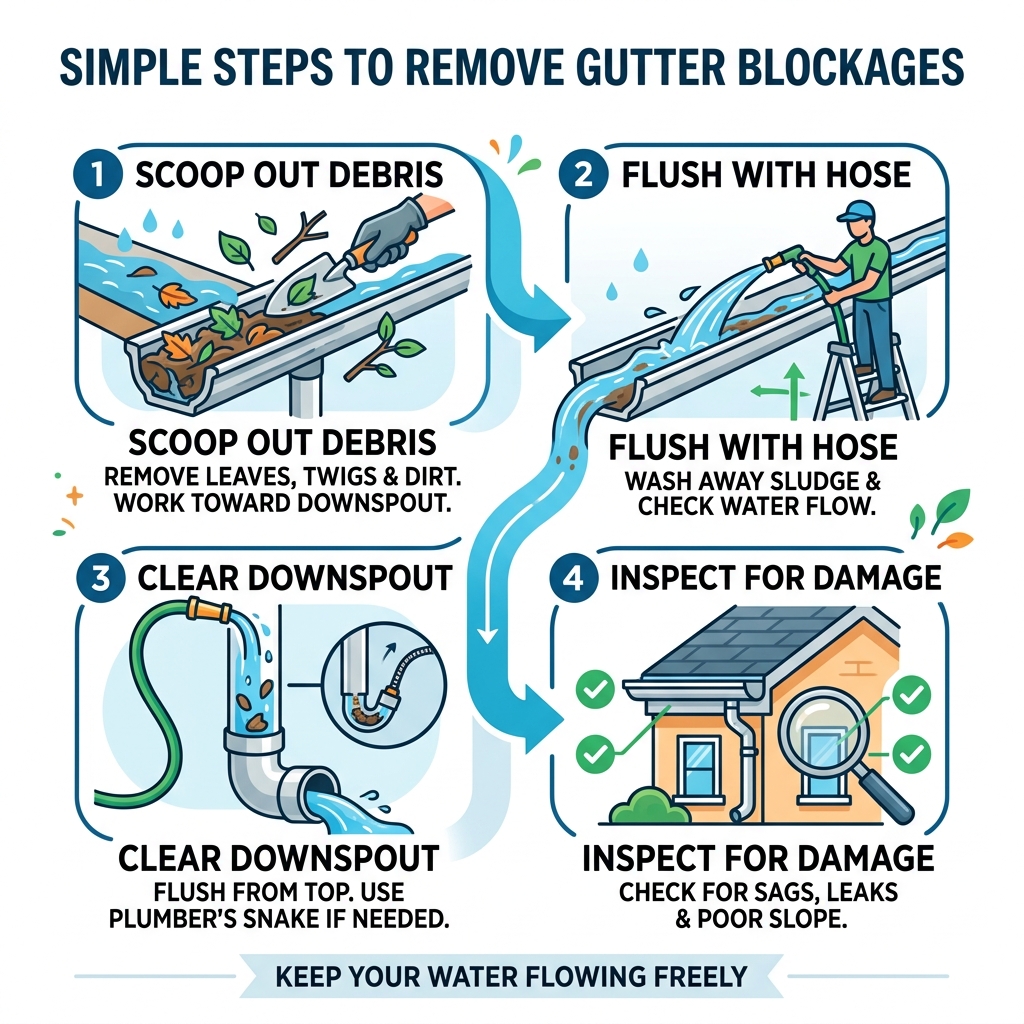
- Scoop out debris from the gutter channel using gloves and a trowel, working toward the downspout
- Flush with a garden hose to clear remaining sludge and test water flow
- Clear the downspout by flushing from the top or using a plumber’s snake for stubborn clogs
- Inspect for damage — check for sagging, leaks, or poor slope while you’re up there
- Call a professional if you have a multi-story home, recurring clogs, or signs of structural damage
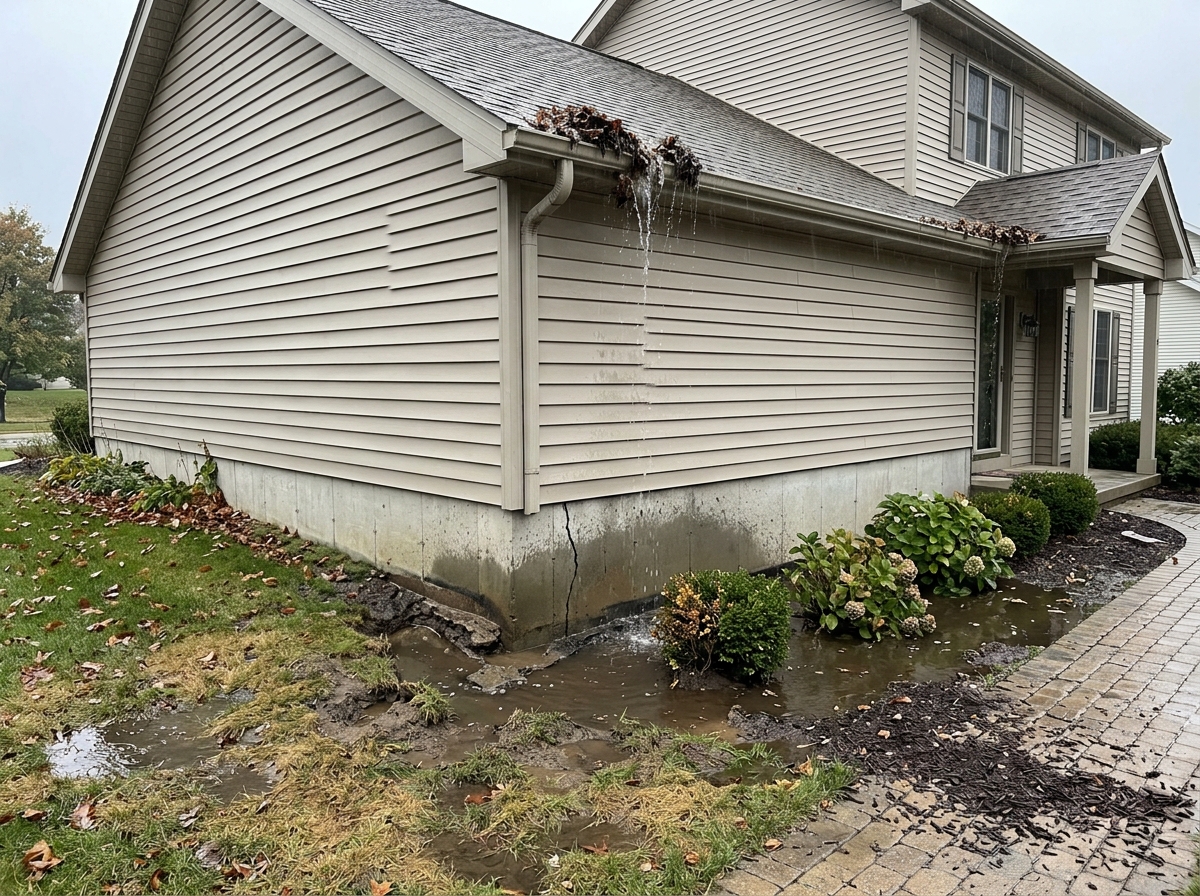
Blocked gutters are one of the most common — and most overlooked — causes of serious water damage to homes. When leaves, twigs, roof granules, and other debris pile up, rainwater has nowhere to go. Instead of flowing safely away from your home, it overflows, pools at your foundation, and seeps into places it was never meant to reach.
The consequences aren’t just cosmetic. Clogged gutters can lead to wood rot, mold, basement flooding, and foundation damage that costs thousands of dollars to repair. And yet, most blockages start small — a handful of wet leaves packed into a downspout elbow is often all it takes.
I’m Damir Bakh, owner of Veco Windows, and I’ve spent years handling gutter blockage removal for homeowners and businesses across North Chicagoland — so I know how quickly a minor clog can turn into a major headache. In this guide, I’ll walk you through exactly how to identify, clear, and prevent gutter blockages — step by step.
Why Gutter Blockage Removal is Essential for Your Home
When we talk about home maintenance in places like Northbrook or Highland Park, we often focus on the roof or the HVAC system. However, your gutters are the unsung heroes of your home’s exterior. Their primary job is to divert thousands of gallons of water away from your structure. When they fail due to a clog, the “domino effect” of damage begins almost immediately.
First and foremost, Why an experienced gutter cleaning service is worth every penny becomes clear when you look at your foundation. When water overflows from a blocked gutter, it pools directly at the base of your house. Over time, this water eats away at the soil and can cause the foundation to crack or shift. In our local Chicagoland climate, this is worsened by the freeze-thaw cycle, where trapped water expands and turns tiny cracks into major structural issues.
Properly cared for gutters can last up to 20 years, but neglect cuts that lifespan in half. Beyond the foundation, standing water is a magnet for trouble. It creates a breeding ground for mosquitoes and attracts pests like carpenter ants and rodents who love the damp environment. Furthermore, that moisture eventually seeps into your fascia boards and rafter tails, leading to wood rot and mold prevention challenges that can affect your indoor air quality. If you want to avoid these headaches, it is wise to book an appointment to prevent foundation damage before the next heavy storm hits.
Identifying the Culprits: Signs and Causes of Clogs
How do you know it’s time for gutter blockage removal? Sometimes the signs are obvious, like a literal waterfall pouring over the side of your house during a downpour. Other times, the signs are more subtle.
According to the resources on clogged gutters, you should look for:
- Sagging Sections: Gutters aren’t designed to hold weight. When they fill with wet leaves and shingle granules, they begin to pull away from the house.
- Plant Growth: If you see “micro-gardens” growing in your gutters, you have a serious blockage that has turned into compost.
- Staining and Musty Odors: Water marks on your siding or a damp smell near the basement are red flags.
- Icicles in Winter: In areas like Arlington Heights, icicles are often a sign of “ice dams” caused by gutters that can’t drain properly.
The “culprits” behind these clogs are usually organic matter like leaves, twigs, and pine needles. However, roof sediment (asphalt granules) and bird nests are also common. If you find yourself facing a blocked gutter, it’s often a combination of these materials packed tightly into the downspout elbows, creating an airtight plug.
Essential Tools and Safety for Gutter Blockage Removal
Before you start, we need to talk about safety. This isn’t just “pro-talk”—the statistics are sobering. Over 500,000 people are treated for ladder-related injuries every year. At VECO, we believe The secret to debris-free gutters and a happy home is doing the job safely or hiring those who can.
If you are attempting a DIY clean, you need the right gear:
- A Sturdy Ladder: Use an extension ladder for two-story homes. Always follow the 4:1 ratio (for every 4 feet of height, the base should be 1 foot out from the wall).
- Stabilizer Bars: These “ladder horns” keep the ladder from crushing your gutters and provide extra stability.
- Personal Protection: Wear heavy-duty suede or rubber gloves to protect against sharp metal and bacteria. Eye protection is a must to keep debris out of your eyes.
- The Right Shoes: Wear non-slip, rubber-soled shoes.
- Three Points of Contact: Always keep two hands and one foot (or two feet and one hand) on the ladder at all times.
Step-by-Step Guide to Clearing Gutters and Downspouts
Clearing a clog is a systematic process. You can’t just spray a hose and hope for the best—that usually just packs the clog tighter into the downspout.
| Method | Best For | Pros | Cons |
|---|---|---|---|
| Manual Cleaning | Heavy debris/neglected gutters | Very thorough, low cost | Time-consuming, requires ladder |
| Power Tools | Dry leaves/light maintenance | Fast, less physical labor | Can be messy, expensive tools |
| Professional Service | Multi-story/complex clogs | Safest, includes inspection | Higher upfront cost |
When you unclog them properly, your gutters should have a slight pitch — ideally a 1/4-inch to 1/2-inch decline for every 20 feet toward the downspout. If water is standing in a “clean” gutter, the slope needs adjustment.
Manual gutter blockage removal techniques
The most effective DIY method is the “Scoop-and-Drop.”
- Step 1: Place a tarp on the ground below your work area to catch the mess.
- Step 2: Start near the downspout. Use a gutter scoop or a small garden trowel to remove the large chunks of debris.
- Step 3: Work in sections, moving the ladder frequently. Never overreach!
- Step 4: Once the large debris is gone, use a garden hose to flush the remaining sludge toward the downspout.
- Step 5: Check for leaks at the joints. If you find any, dry the area and apply a high-quality gutter sealant.
Our professional Gutter Cleaning service follows a similar but more high-powered version of this logic.
Unclogging the downspout for gutter blockage removal
If the gutter is clear but water won’t drain, the downspout is the problem. This requires a bit more “detective work.”
First, try the Tapping Method: Gently tap the side of the downspout from top to bottom. A “hollow” sound means it’s clear; a “thud” means you’ve found the clog. Once located, use a high-pressure hose nozzle at the top to try and force the clog out. If that fails, a plumber’s snake or hand auger is your best friend. Feed it into the pipe and rotate it to break up the “plug” of leaves. Don’t forget to check the extension pipes for clogs at the bottom, as these often get backed up with silt and grass clippings.
Ladder-Free Alternatives for Homeowners
Not everyone is comfortable on a ladder, and that’s perfectly okay. In fact, given the injury stats, ground-based methods are becoming very popular for single-story homes.
You can learn How To Unblock Your Guttering Downpipe using tools like:
- Telescopic Gutter Vacuums: These attach to your wet/dry vac and allow you to suck out debris from the ground.
- Leaf Blower Attachments: Long, curved tubes that blow the dry leaves right out of the channel.
- Water Jet Wands: These attach to your garden hose and use high-pressure streams to “sweep” the gutter.
If you’re in a town like Northbrook, it’s important to know how to pick the perfect gutter cleaning service in Northbrook, IL if these DIY tools aren’t reaching your second-story gutters.
Ground-based gutter blockage removal tools
Ground tools are great for maintenance but have limits. A gutter vacuum might struggle with “gutter muck” that has been wet and compacted for months. Most guides note that while ground tools are safer, they don’t allow for a visual inspection of the gutter’s interior condition, such as checking for rust or loose hangers.
Long-Term Prevention and Maintenance Strategies
The best way to handle gutter blockage removal is to prevent the blockage from happening in the first place. We recommend a multi-pronged approach.
First, consider Gutter Guards. These are not “set and forget,” but they do reduce cleaning frequency by up to 80%. We discuss Libertyville Gutter Cleaning Secrets for a Clog-Free Home which often involves choosing the right mesh guard for the specific trees in your yard (pine needles need a much finer mesh than oak leaves).
Second, Tree Trimming is vital. Keep branches at least 6 to 10 feet away from your roofline. This reduces the sheer volume of debris and prevents squirrels from using your gutters as a highway.
Third, ensure your hardware is up to snuff. Support hangers should be spaced every 2 feet along the gutter to prevent sagging. In places like Bannockburn, we often see The best gutter and fascia cleaning in Bannockburn results from homes that also keep their roofs free of moss, which can break off and clog downspouts.
Finally, in Arlington Heights, IL, snow and ice gutters damage is a unique concern. Keeping gutters clear in the fall prevents ice dams from forming in the winter, which can tear gutters right off the house.
Frequently Asked Questions about Gutter Maintenance
When should I call a professional for gutter blockage removal?
You should call us if:
- Your home is more than one story tall.
- You see signs of structural damage or rotting wood.
- The clog is located underground (this requires specialized cameras and jets).
- You have recurring clogs despite regular cleaning.
If you’re looking for help, check out The Homeowner’s Guide to Finding Affordable Gutter Cleaning Services in Long Grove, IL.
How often should I clean my gutters and downpipes?
At a minimum, you should clean your gutters twice a year—once in the spring (after the “helicopters” and seeds fall) and once in the late fall (after the leaves are down). However, if you have heavy foliage or pine trees, you may need quarterly cleanings. Keep an eye out for our Gutter Cleaning Specials – High Quality Service at Low Prices to stay on top of the schedule.
Are gutter guards worth the investment?
Yes, especially if you have many trees. While they require a higher upfront cost, they protect your home’s foundation and reduce the risk of ladder accidents. As we’ve noted before, Why commercial building gutter cleaning is your roof’s best friend, the same logic applies to residential homes: prevention is always cheaper than repair.
Conclusion
At VECO Window Washing and Gutter Cleaning, we take pride in serving our neighbors in Northbrook and throughout the North Shore. Whether you are in Libertyville, Glencoe, or Glenview, we know the local challenges—from heavy autumn leaves to harsh winter ice.
Proper gutter blockage removal isn’t just about curb appeal; it’s about protecting your biggest investment. If you’re ready to hand off the ladder work to the pros, we’re here to help with professional-grade tools and safety-first service. Check out our Gutter Cleaning Specials and see why we are the trusted choice for Bannockburn gutter maintenance. Keep the water flowing and your home happy!