




Understanding Local Pressure Wash Methods and Equipment
Selecting the appropriate exterior cleaning method requires evaluating the underlying building materials, their current condition, and the nature of the organic growth or dirt present. Exterior surfaces vary widely in porosity and structural strength. Using uniform pressure across every exterior surface can strip finishes, force water behind cladding, or etch masonry.
Professional exterior cleaning relies on commercial-grade machinery with adjustable pressure output and variable flow rates (measured in gallons per minute). Matching water volume, nozzle angles, and specialized cleaning agents allows technicians to lift stubborn contaminants while protecting sensitive architectural features. For a broader look at how pressure washing fits into whole-home care, the Power washing entry explains the mechanical principles behind the process.
High-Pressure Washing for Hard Surfaces
Hard flat surfaces withstand higher water pressure to dislodge heavy buildup, tire marks, ground-in mud, and embedded stains. Concrete driveways, aggregate walkways, solid brick pavers, and unpolished stone benefit from direct, mechanical cleaning action.
When tackling durable masonry, professional surface cleaners distribute water evenly across a circular path, preventing the telltale “zebra stripes” left by uneven hand wands. For tough stains on outdoor surfaces, professional power washing services provide the required mechanical force and steady water volume to clear deep-set debris without damaging the substrate.
| Cleaning Method | Typical Pressure Range | Ideal Surfaces | Primary Cleaning Action |
|---|---|---|---|
| High-Pressure Washing | Higher pressure output | Sound concrete, brick pavers, stone walkways, non-painted masonry | Mechanical force combined with high water volume |
| Soft Washing | Low pressure (similar to garden hose) | Vinyl siding, stucco, cedar shake, painted wood, asphalt roof shingles | Specialized biodegradable cleaning detergents with dwell time |
When to Choose a Gentle Local Pressure Wash Alternative
Delicate siding, modern composite materials, and roof assemblies require a gentler alternative known as soft washing. High pressure applied to vinyl siding can crack panels, break lap joints, or drive moisture directly into wall cavities, creating hidden mold risks. Similarly, blasting asphalt shingles with high pressure strips away the protective mineral granules that shield a roof against weather and UV exposure.
Soft washing applies specialized, surface-appropriate cleaning solutions at low pressure to neutralize algae, moss, and lichen at their roots. Instead of relying on brute mechanical force, this method lets the solution break down organic growth naturally. Homeowners looking to protect siding often choose eco-friendly soft washing to safely treat delicate finishes. This modern soft-washing approach sanitizes the surface so mold and mildew take longer to return.
Step-by-Step Guide: How Exterior Cleaning Restores Surfaces
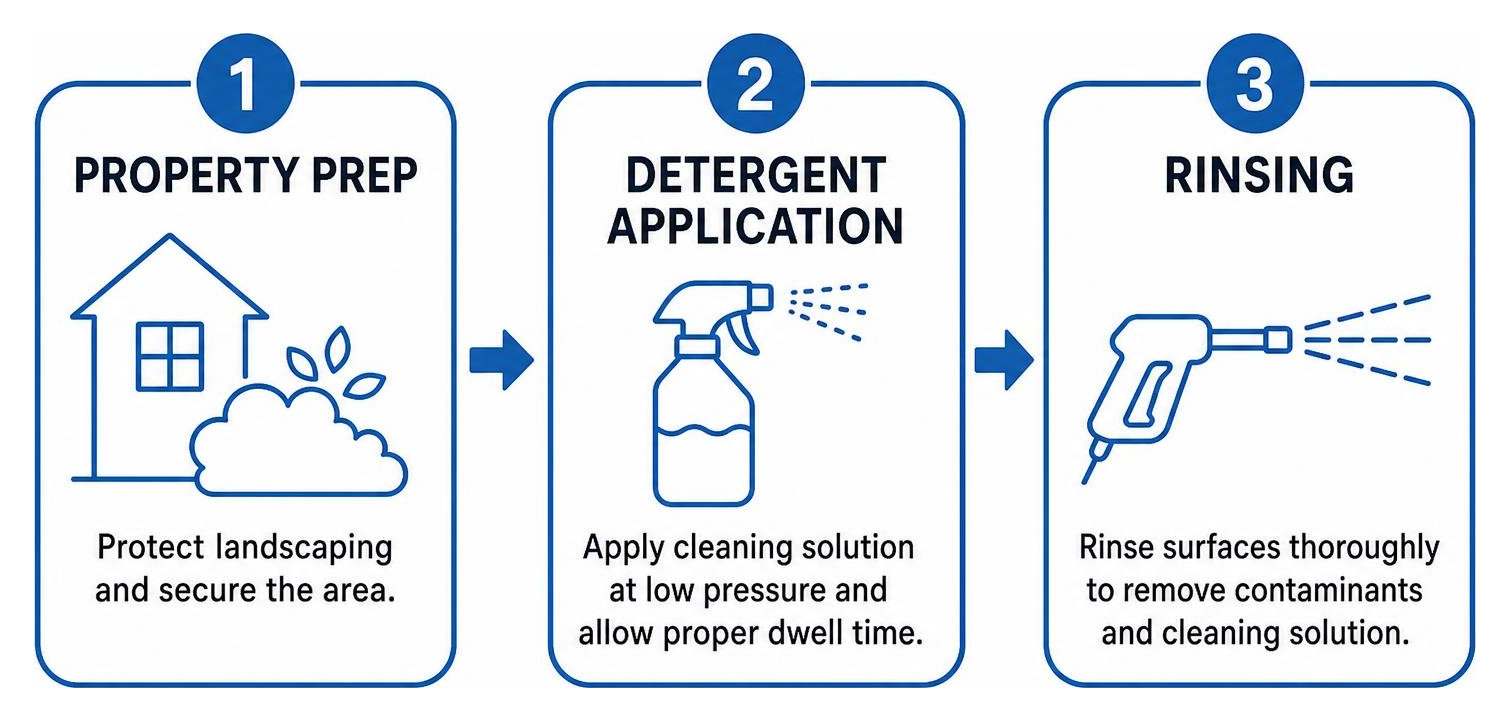
Achieving lasting exterior restoration requires a structured workflow. Skipping safety checks or property preparation can lead to landscape damage, water intrusion, or uneven cleaning results.
Preparing the Property and Surrounding Landscape
Before equipment starts, the cleaning area must be thoroughly secured to protect delicate landscape features and property components.
- Safety and Surface Inspection: Inspect the target area for loose siding, cracked mortar, broken window seals, or exposed outdoor electrical outlets.
- Covering Fixtures: Seal exterior electrical receptacles, doorbells, exterior light fixtures, and security cameras with protective water-resistant wraps.
- Protecting Vegetation: Pre-wet all surrounding grass, shrubs, and flowerbeds with fresh water. Saturated soil and foliage will not absorb runoff detergents during cleaning.
- Clearing Work Zones: Remove outdoor furniture, potted plants, doormats, and decor to provide clear, hazard-free access across all walkways.
Applying Detergents and Lifting Embedded Dirt
Once the work zone is secure, technicians apply targeted cleaning solutions tailored to the specific material and contamination level. Detergents formulated for exterior cleaning loosen organic stains, break surface tension, and kill microscopic spores.
Allowing proper “dwell time” lets the detergent work effectively on the surface before rinsing. This step is essential when restoring driveway surfaces discolored by oil spots, tire tread, and seasonal grime. When revitalizing outdoor decks, balanced cleaning solutions lift graying oxidation and mildew without gouging the wood grain.
Rinsing and Long-Term Surface Preservation
After the detergent lifts embedded stains, a controlled rinse washes away the residue. Water pressure is calibrated to flush contaminants away smoothly without splashing dirt back onto freshly washed surfaces.
Technicians maintain careful control over water flow to guide runoff away from foundational beds into proper drainage zones. Rinsing cleans away slick moss and algae deposits, helping restore safe footing on walkways. Pairing exterior wall washing with integrated gutter and exterior washing ensures that downspouts flow freely, preventing dirty roof overflow from staining freshly washed siding during future storms.
Key Benefits of Regular Professional Pressure Washing
Routine exterior cleaning is an essential part of regular home maintenance. Clearing organic growth and seasonal pollutants preserves building materials and improves everyday living conditions.
- Enhanced Visual Appeal: Removing dark mildew streaks, road film, and pollen restores the original brilliance of your siding, brick, and concrete surfaces.
- Property Value Protection: Regular maintenance prevents permanent staining and material degradation, helping protect long-term market value.
- Elimination of Slip Hazards: Walking surfaces coated in damp algae or mildew become hazardous when wet. Cleaning concrete and paver joints restores natural traction.
- Allergen and Mold Reduction: Clearing spores, tree debris, and airborne contaminants from exterior surfaces limits the irritants that accumulate near entryways, porches, and open windows.
- Extended Substrate Longevity: Removing moss and lichen stops root networks from prying into concrete pores, mortar joints, and shingle tabs.
To learn more about keeping your home’s exterior clean throughout the year, consult our comprehensive exterior house cleaning guide.
How Climate and Environmental Factors Impact Cleaning Needs
Exterior care routines vary based on regional weather patterns, neighborhood tree canopy, and property orientation.
Tailoring Your Cleaning to Local Weather Conditions
In northern climates and lakefront communities, shifting seasons create specific cleaning challenges. Spring brings heavy tree pollen, maple seeds, and dust that stick to damp surfaces. High summer humidity promotes algae, lichen, and mildew on shaded north-facing walls and covered porches.
Autumn drops leaves and organic debris that trap moisture on horizontal decks and stone walkways. As winter arrives, repeated freeze-thaw cycles allow moisture trapped in uncleaned, dirty concrete pores to expand, which can cause surface spalling and fine cracks. When evaluating exterior cleaning needs, finding reliable power washing nearby helps ensure work is scheduled during moderate weather for the safest, most effective results.
Determining the Ideal Cleaning Frequency
For most residential properties with typical environmental exposure, scheduling an annual house wash keeps organic growth and grime under control. Properties surrounded by heavy, mature tree canopies or situated in low-lying, damp areas may benefit from semi-annual cleaning—clearing tree residue in late spring and washing away fallen leaves and grime in autumn.
High-traffic flat surfaces like driveways, front entry steps, and entertaining patios also benefit from annual or bi-annual washes to prevent grease, road salt residue, and slip hazards from becoming permanent fixtures.
Understanding Pricing Factors for Exterior Cleaning
Professional exterior cleaning costs vary from property to property. Rather than relying on rigid, one-size-fits-all figures, established service providers prepare detailed, custom estimates based on several key property factors:
- Total Square Footage: The overall size of the home, deck, patio, or driveway directly impacts project setup, solution volume, and labor requirements.
- Material and Substrate Types: Different surfaces require specialized approaches. A brick paver patio requiring joint care involves different methods than vinyl siding or aggregate concrete.
- Accessibility and Building Height: Multi-story homes, steep rooflines, tiered landscaping, or tightly spaced property boundaries require specialized extension equipment and ladder safety setups.
- Severity of Grime and Organic Buildup: Surfaces with heavy moss, deep oil stains, or years of neglected mildew require pre-treatments, extended dwell times, and thorough washing.
- Water Supply Accessibility: On-site water pressure and the location of functional exterior hose bibs influence workflow and setup efficiency.
- Scope of Combined Services: Bundling house washing with driveway cleaning, gutter clearing, or window washing provides complete property restoration under a single customized proposal.
Frequently Asked Questions About Exterior Cleaning
How often should residential exterior surfaces be pressure washed?
Most residential homes with typical sun and weather exposure benefit from a professional exterior wash once per year. Properties with dense tree shade, high humidity, or close proximity to damp wooded areas may require semi-annual attention to keep algae and moss from taking hold.
What is the primary difference between pressure washing and soft washing?
The primary difference is the operating pressure and the cleaning mechanism. High-pressure washing uses mechanical water force to dislodge dirt from hard, durable surfaces like concrete and stone. Soft washing uses low pressure combined with specialized, biodegradable cleaning solutions that safely eliminate organic growth on delicate materials like vinyl siding, stucco, and roofing shingles.
What factors determine the estimate for a professional exterior wash?
Estimates are determined by overall property size, the specific materials being cleaned, surface accessibility, the height of the home, the severity of organic growth or staining, and any extra services requested, such as flat-surface driveway cleaning or gutter clearing.
Conclusion
Keeping your property clean, safe, and visually appealing requires matching the right cleaning method to every individual surface. From washing durable concrete driveways to soft-washing delicate siding and rooflines, professional exterior cleaning protects your home against seasonal moisture, mold buildup, and environmental wear.
At VECO Window Washing and Gutter Cleaning, our team focuses on careful property preparation, surface-safe techniques, and thorough results for homes across Northbrook and Chicago’s North Shore suburbs. To begin, submit a free estimate request online at any time. Our team will review your property’s dimensions and specific scope of work, prepare a customized individual estimate, and coordinate your service date and arrival window separately.
Ready to restore your home’s exterior beauty? Reach out today to request an exterior power washing estimate tailored to your property.