




Safe, Simple Steps for Cleaning Home Solar Panels
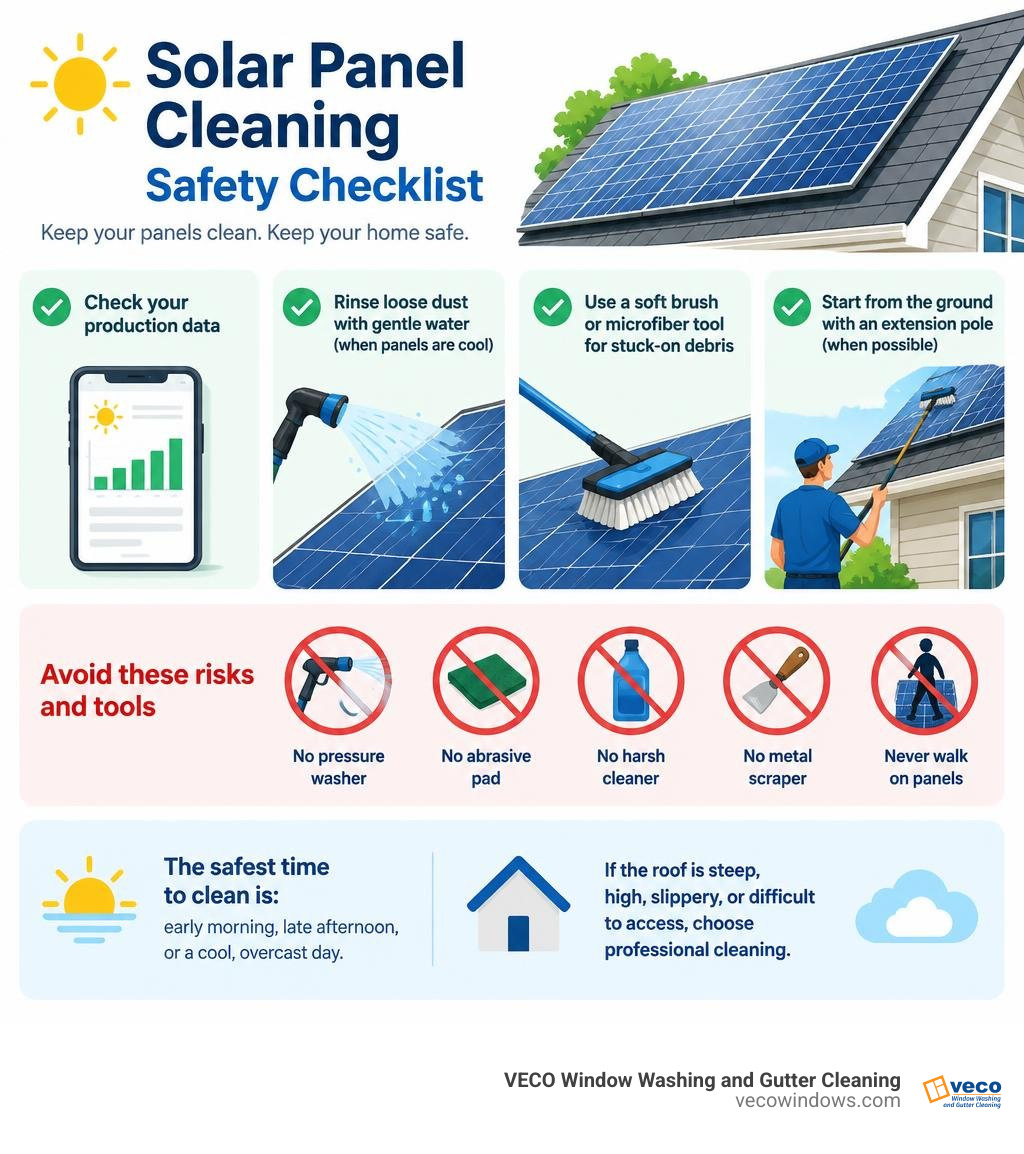
Cleaning home solar panels is usually simple: check your production data, rinse loose dust with gentle water when panels are cool, and use a soft brush or microfiber tool only for stuck-on debris. Do not use a pressure washer, abrasive pad, harsh cleaner, or metal scraper. Never walk on the panels or take roof risks just to remove light dust.
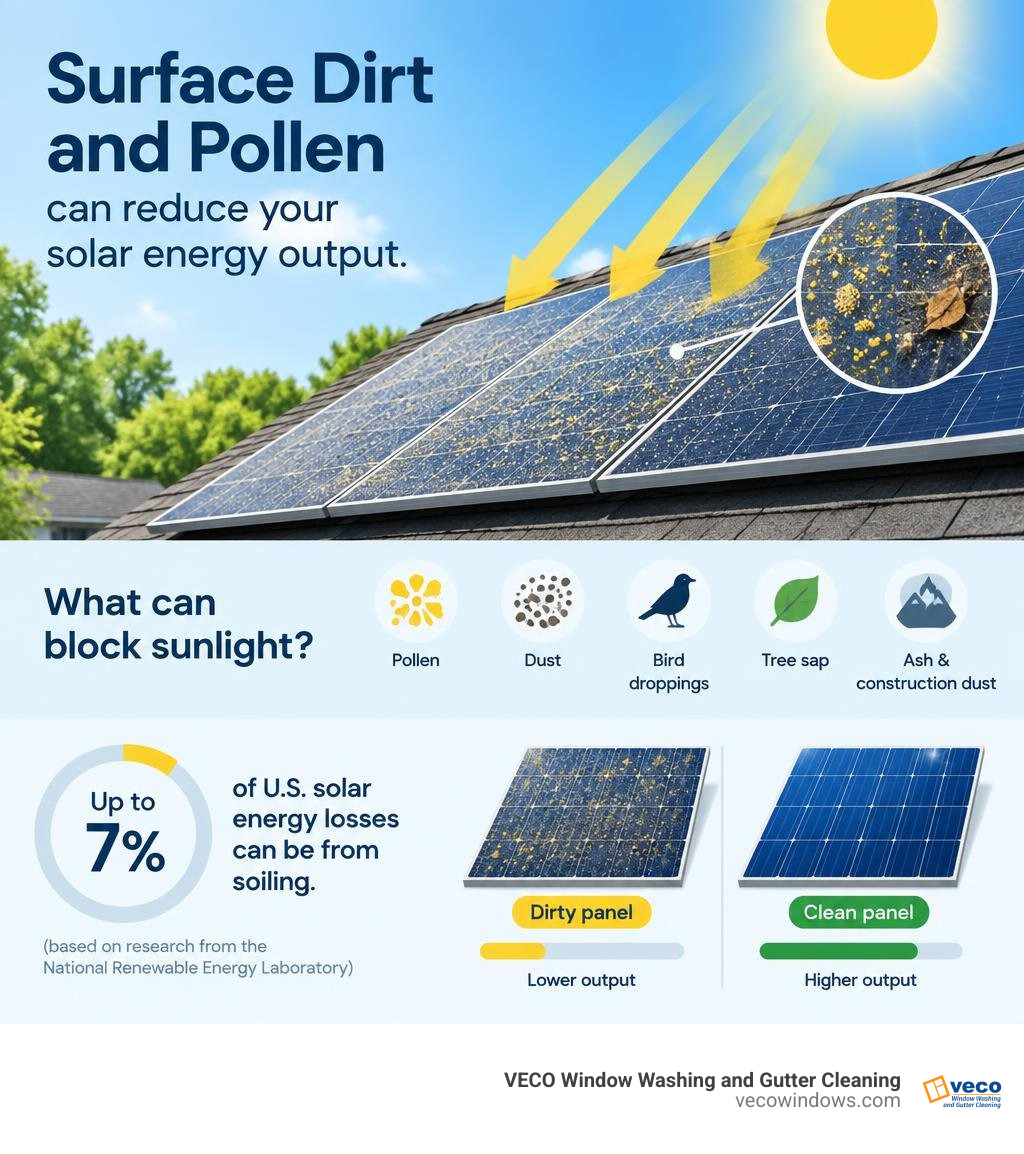
For many North Chicagoland homes, normal rain removes much of the loose pollen and dirt. But bird droppings, tree sap, wildfire ash, construction dust, and heavy pollen can remain after rain and block sunlight. Research from the National Renewable Energy Laboratory indicates that soiling can account for up to 7% of U.S. solar energy losses, though the real effect depends on your roof angle, local conditions, and how much buildup is present.
The safest time to clean is early morning, late afternoon, or on a cool, overcast day. Start from the ground with an extension pole whenever possible. If the roof is steep, high, slippery, or difficult to access, professional cleaning is the safer choice.
Damir Bakh is the owner of VECO Window Washing and Gutter Cleaning, where he oversees exterior cleaning work with close attention to safe equipment use and property conditions. His experience with cleaning home solar panels and other exterior surfaces helps inform the practical roof-safety guidance in this guide.
Why Cleaning Home Solar Panels Matters for System Efficiency
A residential solar system converts sunlight directly into usable electricity through photovoltaic cells. When dirt, tree pollen, organic film, or exhaust dust settles over the glass, it reduces the solar irradiance reaching the silicon wafers underneath. Even a light, seemingly transparent film acts like a tinted screen over your array, cutting into your power generation throughout peak daylight hours.
According to research highlighted by Popular Mechanics on how solar panel soiling impacts energy output, surface grime directly diminishes operating efficiency. While individual panels are designed to perform reliably outdoors for decades, unaddressed accumulation forces your system to operate below its rated capacity. Routine maintenance and targeted cleaning help ensure your investment delivers the kilowatt-hours you anticipated when setting up your array.
The Financial Impact of Cleaning Home Solar Panels vs. Rain Alone
A common misconception among homeowners is that a passing rainstorm will handle all your panel maintenance. While rain does help wash away loose surface dust on arrays with a moderate tilt angle, it rarely dissolves baked-on bird droppings, sticky tree sap, or oily particulate matter. Relying solely on rainfall can leave stubborn residue that thickens over time. In a detailed review of solar panel care, proper washing restored system output that natural rainfall simply could not recover.
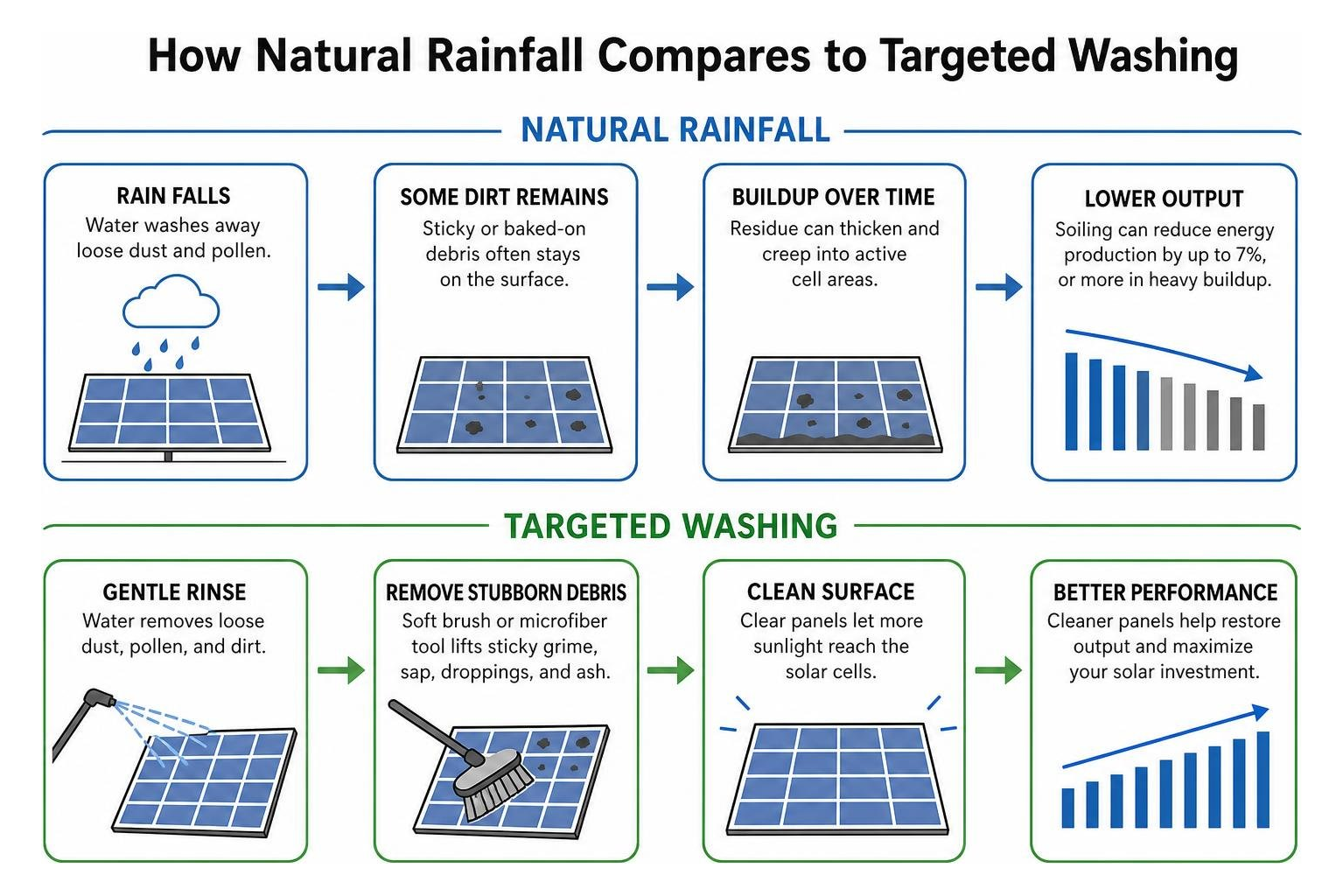
When dust mixes with light moisture, it often creates a muddy film that clings to the bottom frames of pitched panels. Over several dry weeks, this boundary film creeps upward into active cell areas. Left unwashed, heavy soiling can reduce overall efficiency by 15% to 25%, noticeably trimming monthly utility savings.
How Soiling and Environmental Debris Degrade Solar Cells
Beyond lowering short-term output, localized debris creates physical risks for your solar modules. When isolated contaminants—such as bird droppings, fallen leaves, or clumps of agricultural dust—cover a single photovoltaic cell while adjacent cells receive full sunlight, the obstructed cell stops producing power and begins acting as a resistor.
This resistance converts incoming electrical current into localized heat, creating what the industry calls “hot spots.” Over time, severe hot spots can scorch protective backsheets, degrade internal solder joints, and trigger permanent cell failure. Furthermore, conductive mineral dust combined with ambient moisture can contribute to Potential-Induced Degradation (PID), permanently damaging cell efficiency before the module reaches its expected lifespan.
Safe DIY Techniques vs. Professional Solar Maintenance
Deciding whether to wash your array yourself or schedule professional service comes down to roof pitch, building height, and personal comfort with exterior maintenance tools. Working around residential rooflines introduces fall hazards, electrical components, and delicate tempered glass that can easily be damaged if handled incorrectly.
| Maintenance Factor | DIY Solar Cleaning | Professional Solar Maintenance |
|---|---|---|
| Primary Safety Level | High risk if accessing roof; Moderate from ground | Low homeowner risk (trained technicians) |
| Equipment Used | Standard hose, soft brush, extension pole | Pure deionized water systems, specialized soft-bristle brushes |
| Water Quality | Tap water (risk of mineral deposits/spotting) | Multi-stage filtered, mineral-free water |
| System Inspection | Basic visual check from distance | Detailed physical inspection of frames, wiring, and glass |
| Best Suited For | Single-story homes, accessible ground mounts | Multi-story roofs, steep pitches, heavily soiled arrays |
Best Methods and Tools for Cleaning Home Solar Panels Safely
If your array is accessible from the ground or a secure, low-standing structure, you can safely wash the panels using standard supplies. Always prioritize ground-level cleaning using a telescoping water-fed pole equipped with a soft nylon-bristle brush.
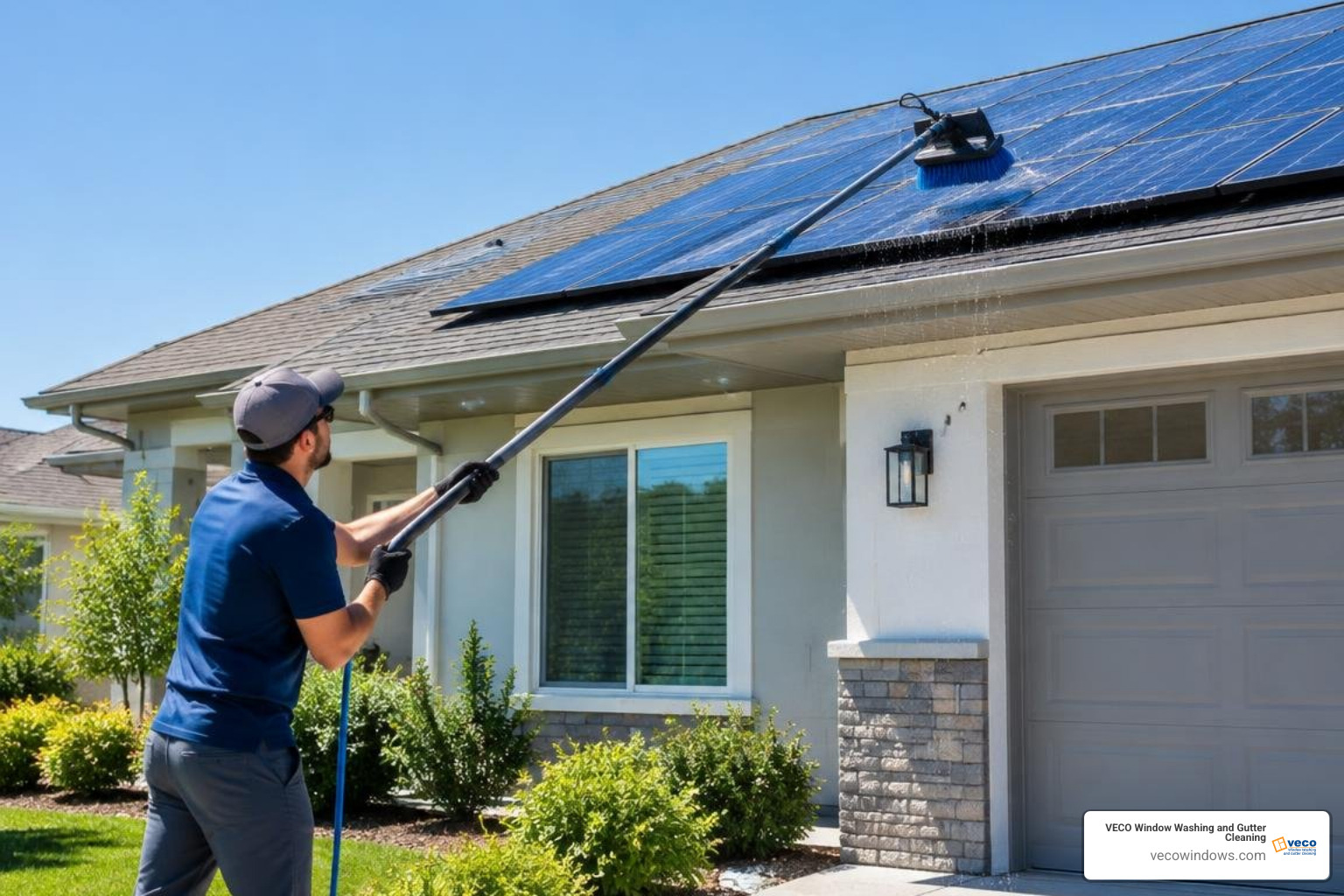
Follow these safe washing principles:
- Use plain, filtered water: If your household water has high mineral content (hard water), consider using an in-line filter or distilled water for the final rinse to prevent cloudy calcium scale.
- Select mild solutions only: When sticky debris requires soap, mix a few drops of gentle, biodegradable dish soap into lukewarm water. Avoid detergents with waxes or harsh additives.
- Protect sensitive glass: Refer to manufacturer-specific recommendations, such as proper care techniques for LG solar panels, to ensure the factory-applied anti-reflective coating remains intact.
- Work with light pressure: Use low-pressure garden hose nozzles. Never scrub vigorously; let the water soften dried residue before gently sweeping it away with a soft microfiber cloth or squeegee.
Critical Mistakes to Avoid: Protecting Anti-Reflective Coatings and Warranties
Modern solar modules feature an ultra-thin anti-reflective and hydrophobic coating on the tempered front glass. This microscopic layer captures additional light spectrums, boosting overall power output. Improper cleaning methods can permanently abrade or chemically etch this surface, voiding your manufacturer warranty.
Avoid these critical solar cleaning mistakes:
- Never use a pressure washer: High-pressure spray (over 100 PSI) can force water past watertight silicone frame seals, crack glass, and destroy junction boxes.
- Never pour cold water onto hot glass: Washing panels during peak midday heat induces thermal shock, which can cause internal micro-cracking or shatter the tempered glass entirely.
- Never use abrasive scrubbers: Steel wool, scouring pads, and stiff wire brushes scratch the glass and reduce light transmission forever.
- Never apply harsh chemicals: Ammonia, bleach, heavy degreasers, and standard glass cleaners like Windex leave chemical films or corrode the anodized aluminum frames.
- Never walk on your solar panels: Photovoltaic modules are not designed to bear human weight; walking on them creates microscopic cell fractures that compromise output and safety.
Safe Snow and Winter Debris Removal Techniques
During Midwest winters, snowfall temporarily halts solar generation by blocking incoming light. In most instances, you do not need to manually clear snow. Solar arrays are installed at an incline, and the dark silicon wafers absorb ambient heat as soon as the sun emerges, prompting snow to slide off naturally.
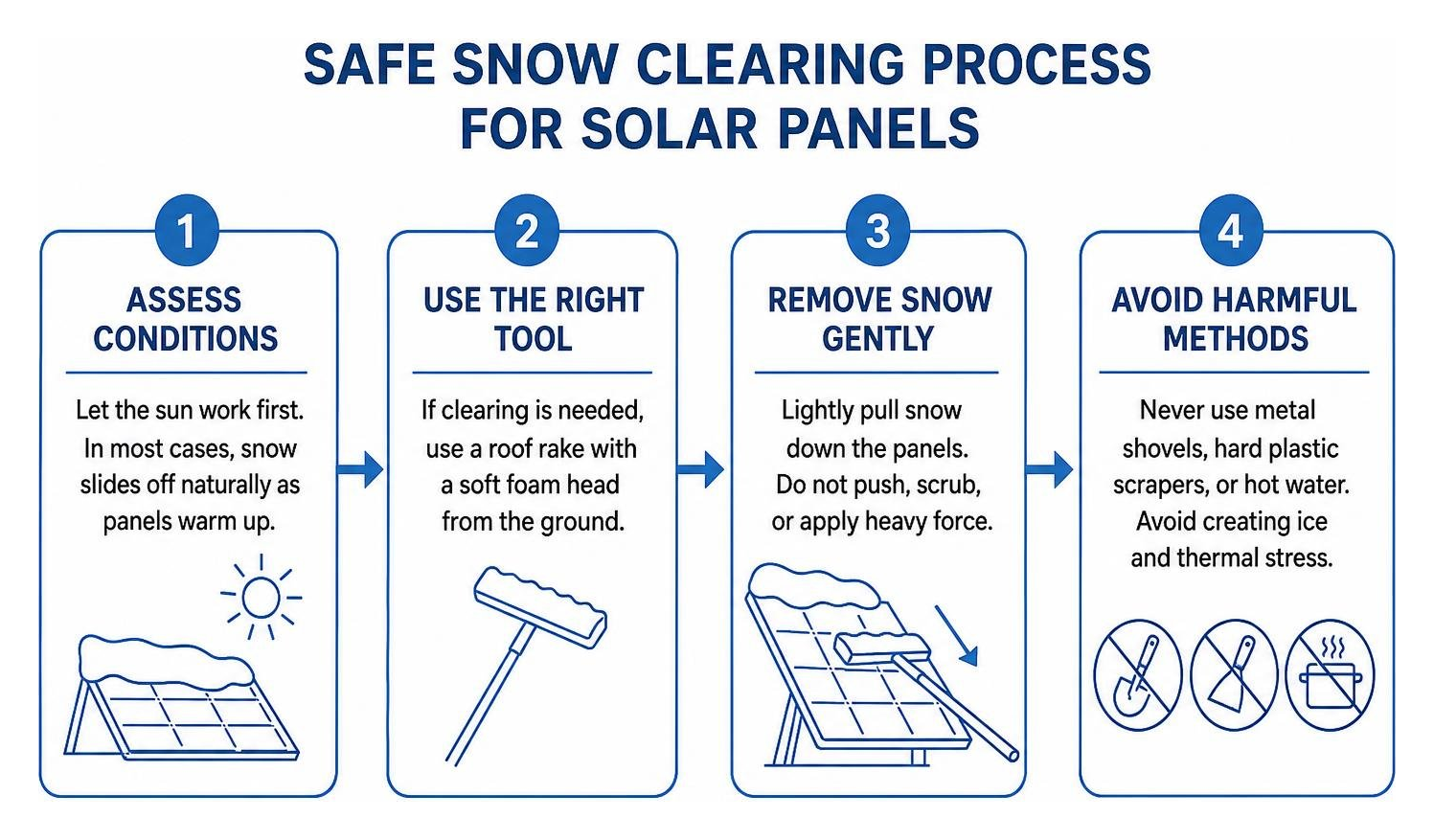
If heavy, prolonged snow accumulation persists and you choose to clear it, use a specialized roof rake fitted with a soft foam head from the safety of the ground. Never use metal shovel blades, hard plastic scrapers, or hot water, as freezing water creates immediate ice dams and thermal stress on cold glass.
Key Factors Influencing Solar Maintenance Schedules and Costs
Planning your maintenance schedule depends on property surroundings, seasonal weather cycles, and tree cover. For homes across Northbrook and neighboring North Shore communities, balancing solar cleaning with seasonal window washing and gutter cleaning keeps the entire building envelope performing properly.

Using eco-friendly exterior maintenance methods ensures runoff from your roofline will not harm surrounding landscaping, patio surfaces, or pets while protecting exterior fixtures.
Regional Climate and Maintenance Frequency Guidelines
Environmental exposures dictate how often your solar array requires washing:
- Temperate & Suburban Areas (1–2 times per year): For most residential properties, a thorough cleaning in late spring (after heavy tree pollination) and an optional rinse in early autumn handles seasonal buildup.
- Densely Wooded Neighborhoods (2–3 times per year): Properties situated under mature oaks, maples, or pines face sticky sap mists, organic debris, and bird activity that demand regular attention.
- Agricultural & High-Dust Zones (3–4 times per year): Proximity to open fields, ongoing construction, or heavy transit corridors accelerates dust accumulation, requiring quarterly visual checks.
- Coastal & Salt-Air Belts (Every 2–3 months): Airborne sea salt creates a haze that requires frequent deionized water rinses to avoid surface etching.
What Determines Professional Solar Service Pricing
When requesting professional solar maintenance, pricing is tailored to the specific parameters of your property rather than flat, one-size-fits-all rates. Key factors that determine the scope and cost of service include:
- Array Accessibility and Roof Pitch: Single-story, low-slope roofs are straightforward to reach, whereas multi-story homes or steep architectural pitches require specialized ladder stabilizers and fall-protection equipment.
- Total Panel Count and Layout: The size of the photovoltaic system and whether panels are grouped in a single array or split across multiple roof faces influences the time needed on-site.
- Surface Condition and Soiling Level: Light seasonal dust requires less time than arrays covered in heavy bird droppings, baked-on tree sap, or chimney soot.
- Water Filtration Requirements: Utilizing professional multi-stage deionization filtration systems ensures a spot-free, streak-free rinse without leaving tap water mineral residue on the glass.
Frequently Asked Questions About Rooftop Solar Care
How often should residential solar panels be washed?
Most residential systems perform best with cleaning once or twice a year. The most reliable approach is monitoring your system’s mobile inverter app: if you notice an unexplainable 5% to 10% dip in output on clear, sunny days compared to previous seasons, inspect the glass surface for dirt and schedule a wash.
What time of day is best to wash rooftop solar arrays?
Early morning is the ideal time to clean solar panels. The modules are cool from the overnight hours, preventing rapid water evaporation and eliminating the risk of thermal shock. Alternatively, washing during late evening or on a mild, completely overcast day ensures a clean, streak-free finish.
Will washing panels myself void my manufacturer warranty?
Washing panels yourself will not void your warranty as long as you follow the manufacturer’s approved guidelines. Using soft brushes, low water pressure, and mild, non-abrasive soap preserves warranty standing. However, using pressure washers, harsh chemical solvents, abrasive pads, or walking across the panels can instantly void structural and performance coverage.
Conclusion
Keeping your rooftop solar panels clean ensures your photovoltaic system captures maximum sunlight and delivers dependable energy savings year after year. While light dust often washes away during heavy rain, stubborn residues like tree sap, pollen, and bird droppings require gentle, intentional care.
If your panels are high, located on a steep roof pitch, or difficult to reach safely from the ground, our team is here to help. When you contact VECO Window Washing and Gutter Cleaning, we review your property layout, evaluate the scope of work, and prepare an individual estimate tailored to your home before confirming your service appointment. Homeowners in Northbrook and surrounding North Chicagoland communities can rely on our dedicated professional solar panel cleaning services to keep their solar arrays operating at peak performance.