




Telltale Signs and Primary Causes of Gutter and Downspout Blockages
To unclog gutters and downspouts safely, flush open troughs using a curved ground-level hose wand or leaf blower attachment, extract lower elbow clogs with a wet/dry shop-vac, or feed a manual plumbing auger into stubborn bends to dislodge compacted debris. For buried runs, empty the catch basin and flush the line with an expanding rubber drain bladder. Applying these practical steps alongside easy overflow repair tips ensures roof runoff flows freely, preventing ruined siding, soil erosion, and foundation trouble.
According to data from the Insurance Information Institute, about 1.5% of insured homes experienced a water damage and freezing loss annually between 2019 and 2023. Many of these claims stem directly from preventable exterior drainage failures.
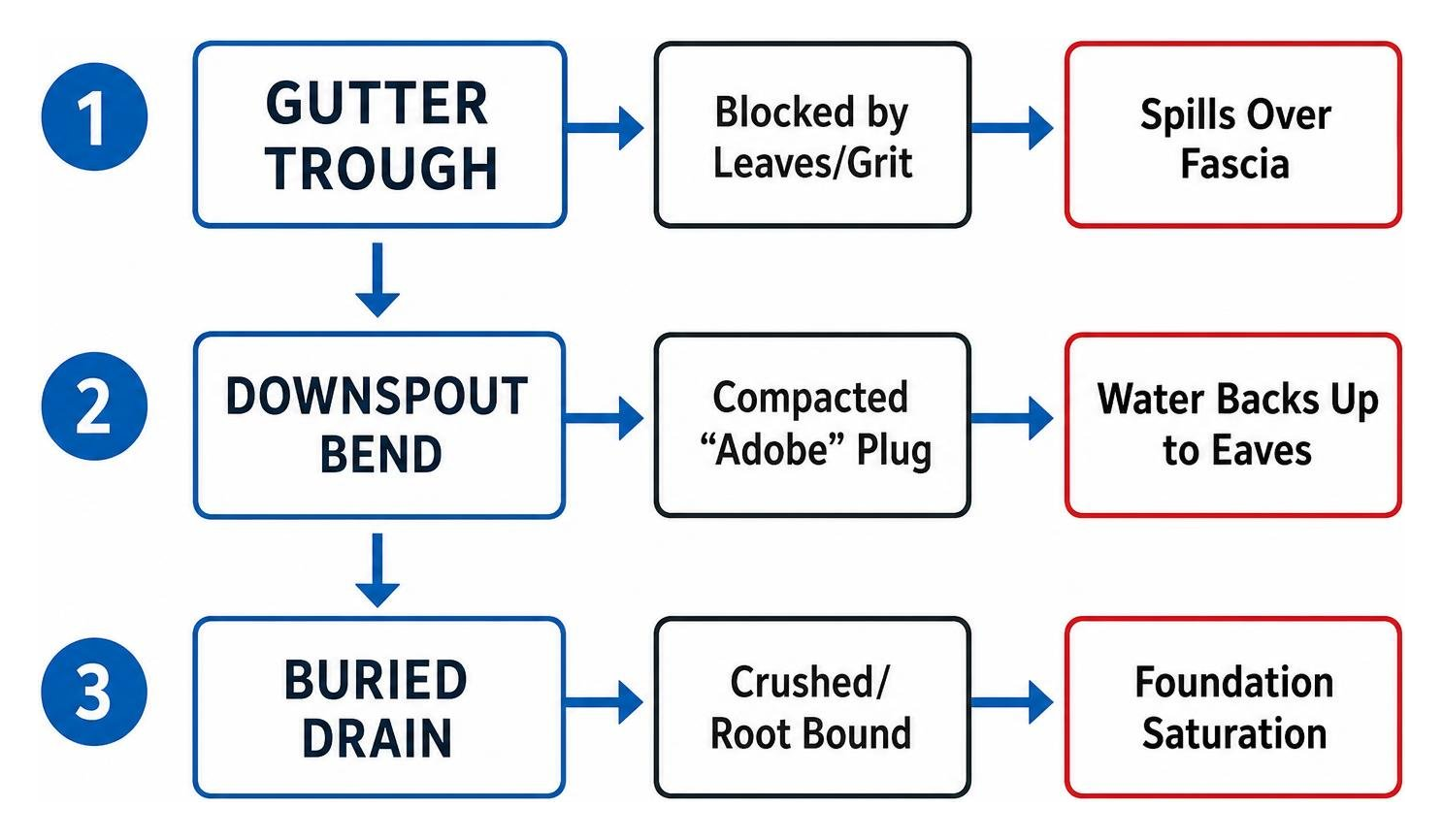
Identifying Drainage Issues Before Water Damage Occurs
You do not need to climb onto your roof during a thunderstorm to diagnose drainage trouble. Walk around your home’s perimeter during or immediately after rainfall to spot these clear warning signs:
- Waterfalls over the gutter edge: If sheets of water cascade over the front lip while nearby downspouts trickle, a localized blockage is keeping the runoff from reaching the vertical drop.
- Mud splashes on exterior siding: Cascading water hits landscaping or soil below and splatters dirt across your foundation and exterior walls.
- Sagging or pulling gutter channels: Wet organic debris is heavy. A 10-foot section filled with wet leaves and standing water can weigh dozens of pounds, loosening spikes and pulling fascia boards away.
- Mystery puddles near the foundation: Water pooling within 3 to 4 feet of your foundation indicates downspouts are either overflowing at the top or failing to discharge properly at ground level.
- Basement dampness and musty odors: Saturated soil around your perimeter pushes water through hairline foundation cracks, leading to crawl space leaks and mold growth.
- Pest and insect activity: Stagnant water sitting in shaded troughs creates ideal breeding grounds for mosquitoes, carpenter ants, and nesting birds.
Common Culprits Behind Overflow and Trapped Debris
Different types of debris create unique blockages inside gutter troughs and downspout bends. Understanding what is accumulating on your roof helps you choose the right clearing approach:
- Deciduous leaves and twigs: Oak, maple, and birch leaves form thick, interwoven mats across gutter bottoms and wedge tightly into upper drop outlets.
- Pine needles: Because of their slender shape, pine needles bypass many standard screens, slide into tight downspout joints, and weave dense, bird-nest-like plugs.
- Asphalt shingle granules: Even homes without nearby trees face grit accumulation. Heavy mineral granules wash off asphalt shingles, settling as dense silt in low spots and pipe elbows.
- Helicopter seeds and blossom tassels: Spring brings maple seeds and oak catkins that clump together quickly when exposed to moisture.
- Decomposed organic muck: Left unaddressed across multiple seasons, wet organic material breaks down into a heavy, hardened mass resembling adobe clay inside vertical drops. Maintaining debris-free gutters prevents this sediment from hardening into difficult plugs.
Step-by-Step Guide: How to Unclog Gutters and Downspouts
Clearing your drainage system does not always mean balancing on a tall ladder. Using the right sequence of ground-level techniques, simple mechanical tools, and water pressure lets you tackle clogs safely and efficiently. Always wear durable rubber-coated work gloves, protective safety glasses, and sturdy shoes before starting.
When taking on this task yourself, following the best DIY gutter cleaning solutions for a spotless home keeps the process manageable and organized.
Safe Ladder-Free Methods: How to Unclog Gutters and Downspouts from the Ground
For single-story homes or accessible downspout runs, ground-level clearing offers a safe and fast starting point:
- Telescopic gutter wands: Connect a curved wand attachment to your garden hose. Standing firmly on the ground, extend the pole over the gutter edge and flush debris toward the downspout opening.
- Leaf blower extension tubes: Specialized curved blower nozzles hook over the gutter channel. Blow loose, dry leaves away from downspout drops before they get wet and compacted.
- Reverse airflow at the lower outlet: Fit your leaf blower nozzle directly into the bottom opening of your downspout. Seal the connection temporarily with a rag and pulse air upward. This reverse pressure dislodges dry leaf jams at lower bends and pushes them out the top opening. That dislodged debris will fly upward, so step aside to avoid falling material.
- Flexible ground-clearing tools: Pole-mounted flexible dislodging attachments (such as the SPUTTER attachment) fit onto standard extension handles. Pushing a flexible head into the bottom downspout opening breaks apart light blockages mechanically without climbing.
- Upward hose flushing: Insert a garden hose nozzle into the bottom downspout elbow, point it straight up, and turn the water on in brief bursts to loosen packed debris. Check out these safe downspout flushing methods to avoid placing unnecessary strain on pipe seams.
Tools and Techniques: How to Unclog Gutters and Downspouts with Stubborn Blockages
When wet leaves and shingle grit compress into dense plugs at tight elbow joints, gentle flushing alone may not move the obstruction. Applying mechanical tools and suction clears stubborn blockages effectively:
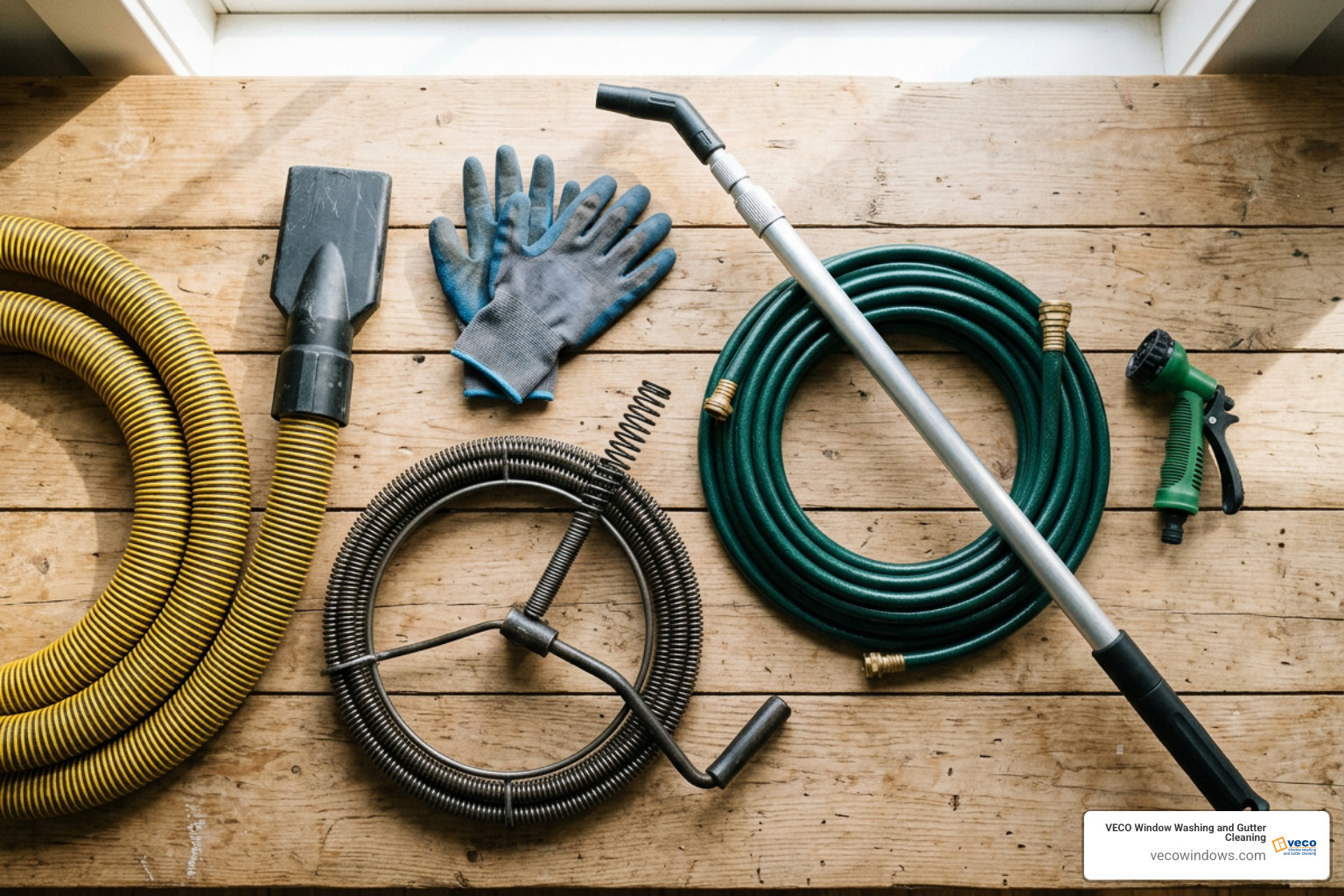
- Wet/Dry shop-vac extraction: For dry or partially damp clogs, insert your shop-vac hose into the bottom downspout opening. Wrap a damp cloth around the joint to create a tight seal, then run the vacuum for 30 to 60 seconds. Suction pulls heavy shingle grit and leaf plugs downward into the canister without muddying your siding.
- Manual plumber’s drain auger (snake): Feed a lightweight manual drain snake into the downspout from the bottom opening or through the top drop. Rotate the drum slowly while advancing the cable. When you feel resistance, rotate the handle to bore through the plug, then gently pull back to extract chunks of debris. Avoid heavy motorized drain snakes on lightweight aluminum downspouts to prevent puncturing the metal walls.
- Expanding drain bladder (blow bag): Attach a rubber drain bladder to your garden hose and push it several feet up into the downspout or down from the top drop. When turned on, the bladder expands against the pipe walls to seal the line, then releases pulsating water jets that push the blockage through.
- Disassembling lower elbow joints: If a clog remains stuck in a tight bend, use a cordless driver to remove the sheet metal screws holding the bottom elbow. Pull the elbow free and clean out the compacted buildup by hand. Reattach the section using short sheet metal screws. Implementing these simple fixes for clogged gutters restores proper flow in just a few minutes.
Clearing Buried Lines: How to Unclog an Underground Gutter Drain
Many suburban homes direct downspouts into subterranean PVC or corrugated pipes that carry runoff toward the street, pop-up emitters, or dry wells. When an underground drain backs up, clearing requires a methodical approach:
- Disconnect the downspout adapter: Loosen the transition collar connecting the aluminum downspout to the buried pipe. Shine a flashlight down the opening to check for blockages right at the surface.
- Clean out catch basins and sumps: If your system includes a low-profile catch basin, lift the grate and scoop out accumulated silt, leaves, and shingle granules resting in the bottom sump.
- Vacuum out heavy sediment: Shingle grit is dense and settles into low spots in underground runs. Water pressure alone can push grit into tighter dams. Inserting a wet/dry vac hose with a rag seal pulls pounds of loose mineral silt directly out of the line.
- Feed a drain auger: Insert a 25- to 50-foot hand or drum auger into the buried pipe opening. Push the snake down the line until you meet the obstruction. Rotate the auger to break up compacted roots or leaf packs, then slowly retrieve the cable. Clearing standard residential runs with an auger typically takes 20 to 45 minutes.
- Flush with high flow: After breaking up the blockage, insert a running garden hose with an expanding blow bag to flush residual sediment out through the discharge point or pop-up emitter. Review detailed underground downspout drain clearing techniques to diagnose subterranean drainage problems safely without digging.
Proactive Maintenance and Prevention Strategies
Routine seasonal maintenance prevents minor debris buildup from turning into expensive water damage. Pairing the right clearing tools with a predictable schedule keeps water flowing freely through every season.
| Cleaning Tool / Method | Best For | Ladder Required? | Ideal Debris Type |
|---|---|---|---|
| Curved Hose Wand | Quick flushes, open troughs | No (Ground level) | Fresh leaves, light dust |
| Leaf Blower Attachment | Dry seasonal cleanout | No (Ground level) | Dry oak/maple leaves, pine needles |
| Wet/Dry Shop-Vac | Dense grit & lower elbows | No (Ground level) | Heavy shingle grit, wet muck |
| Manual Hand Auger (Snake) | Stubborn elbow blockages | Optional (Top or Bottom) | Compacted leaf mats, twigs |
| Manual Trowel & Bucket | Deep structural inspection | Yes (Ladder required) | Heavy multi-season silt, clay muck |
| Rubber Drain Bladder | Underground drain tiles | No (Cleanout access) | Deep sediment, underground clogs |
Following post-weather gutter maintenance after severe summer thunderstorms or heavy wind events ensures unexpected branches and roof debris do not block drainage runs before the next downpour.
Establishing a Seasonal Cleaning Routine
A dependable gutter maintenance schedule requires at least two thorough cleanings per year:
- Late spring: Clear away spring blossom tassels, seed pods, and airborne pollen that settle in troughs and restrict drainage ahead of heavy summer storms.
- Late fall: Once trees have dropped their leaves, clear all channels and flush downspouts before freezing temperatures arrive.
- Freeze-thaw preparation: In northern areas, trapped water inside gutters freezes into heavy ice dams. These stress gutter brackets, pull channels out of pitch, and force thaw water beneath roof shingles.
Reviewing a comprehensive year-round gutter maintenance schedule helps you protect your roofline and foundation year after year.
Evaluating Downspout Strainers and Gutter Guards
Protective accessories reduce how often you need to clean your gutters, though every system still benefits from periodic inspections:
- Downspout strainers (wire cages): Inexpensive wire mesh or plastic strainers sit inside the top drop opening. They keep large leaf clumps from entering vertical drops, though they require manual clearing if leaves collect around the intake.
- Micro-mesh gutter guards: Fine stainless-steel micro-mesh screens block leaves, pine needles, and roof grit while letting water pass into the trough.
- Maintenance realities: Even guarded systems need periodic care. Fine roof silt, pollen, and sap can accumulate on screen surfaces over time. Learning the facts about cleaning gutter guards helps you keep filtration screens working efficiently.
When to Call a Professional for Gutter and Downspout Clearing
While single-story gutters and ground-level downspouts are well-suited for straightforward DIY care, certain situations call for professional equipment and safety measures:
- Multi-story homes and steep rooflines: Working on tall extension ladders above single-story heights significantly increases fall risks. Professional teams use stabilized ladder gear, safety harnesses, and specialized standoffs.
- Severe underground root intrusion: Tree roots can penetrate tiny seams in buried drain tiles, growing into thick root balls that resist basic hand snakes. Professional hydrojetting or mechanical root cutters are needed to clear the line without digging up the lawn.
- Suspected cracked or crushed pipes: If an underground line clogs repeatedly in the exact same spot, heavy machinery, vehicles, or settling soil may have crushed the pipe. A sewer camera inspection identifies the exact location and condition of the break, avoiding unnecessary excavation.
- Gutters pulling away from fascia: If channels are sagging, holding standing water, or pulling free from the roofline, they need realignment, re-pitching (maintaining at least 1/4 inch of drop per 10 feet), and structural re-securing with heavy-duty gutter screws.
- Proximity to overhead power lines: Never handle long metal ladders, aluminum poles, or cleaning wands near utility lines.
Homeowners across Glenview, Highland Park, and Arlington Heights rely on trained exterior cleaning professionals to handle high rooflines and persistent drainage problems safely.
Frequently Asked Questions About Clearing Gutters and Downspouts
How much does professional gutter and downspout cleaning cost in Northbrook, IL?
Professional exterior cleaning pricing depends primarily on the total linear footage of your gutter system, the height and pitch of your roof, the presence of gutter guards, and the general level of debris accumulation. Single-story homes with easily accessible rooflines generally fall on the lower end of standard service rates, while multi-story properties, steep slate or cedar shake roofs, or heavily clogged underground drainage runs require additional labor, specialized equipment, and time. Contacting a local exterior cleaning professional for an on-site or virtual assessment provides an accurate quote tailored to your property’s specific layout.
How do I know if my downspout is clogged or broken underground?
To determine whether an underground drainage pipe is simply clogged or physically damaged, perform a water flow test. Disconnect the downspout from the underground adapter and run a garden hose at full volume into the buried pipe. If water backs up out of the adapter immediately, a blockage is present.
If a mechanical drain auger passes 25 to 50 feet through the pipe without clearing the issue, or if you notice soft, sunken patches of lawn along the pipe’s path, the line may be crushed, disconnected, or invaded by tree roots. A quick sewer camera inspection identifies whether mechanical clearing will resolve the issue or if a damaged pipe section needs repair. You can also watch a helpful video tutorial on unclogging downspouts to see common troubleshooting steps in action.
How often should gutters and downspouts be cleaned to prevent water damage?
As a baseline rule, clean your gutters and downspouts at least twice per year: once in late spring to remove tree seeds, flower petals, and pollen tassels, and once in late autumn after all leaves have dropped.
Properties surrounded by mature oak, maple, or evergreen pine trees may require three to four cleanings annually to prevent overflow during heavy seasonal storms. Conducting brief visual inspections after major windstorms ensures unexpected branches and twigs are not blocking the downspout outlets.
Conclusion
Clear, functional gutters and downspouts are your property’s first line of defense against exterior water damage, foundation shifting, and costly interior repairs. By spotting the warning signs of drainage clogs early, using safe ground-level clearing methods, and maintaining a regular seasonal cleaning schedule, you protect your home through every heavy downpour.
When challenging rooflines, stubborn underground blockages, or busy schedules make DIY maintenance difficult, our team is ready to help. VECO Window Washing and Gutter Cleaning provides thorough, dependable exterior cleaning solutions for homeowners throughout Evanston, Buffalo Grove, and the greater North Chicagoland area. Discover how to unclog your downspouts in Northbrook, IL and keep your drainage system flowing smoothly before the next storm arrives.